Building for Tomorrow, Today
Every building or structure has a designated lifetime: 30 years, 50 years, 100 years. However what happens when the conditions of tomorrow aren’t the conditions of today, or even the conditions of yesterday.
That is truly the situation we are staring the face, but not acknowledging.
Shifting What is Normal
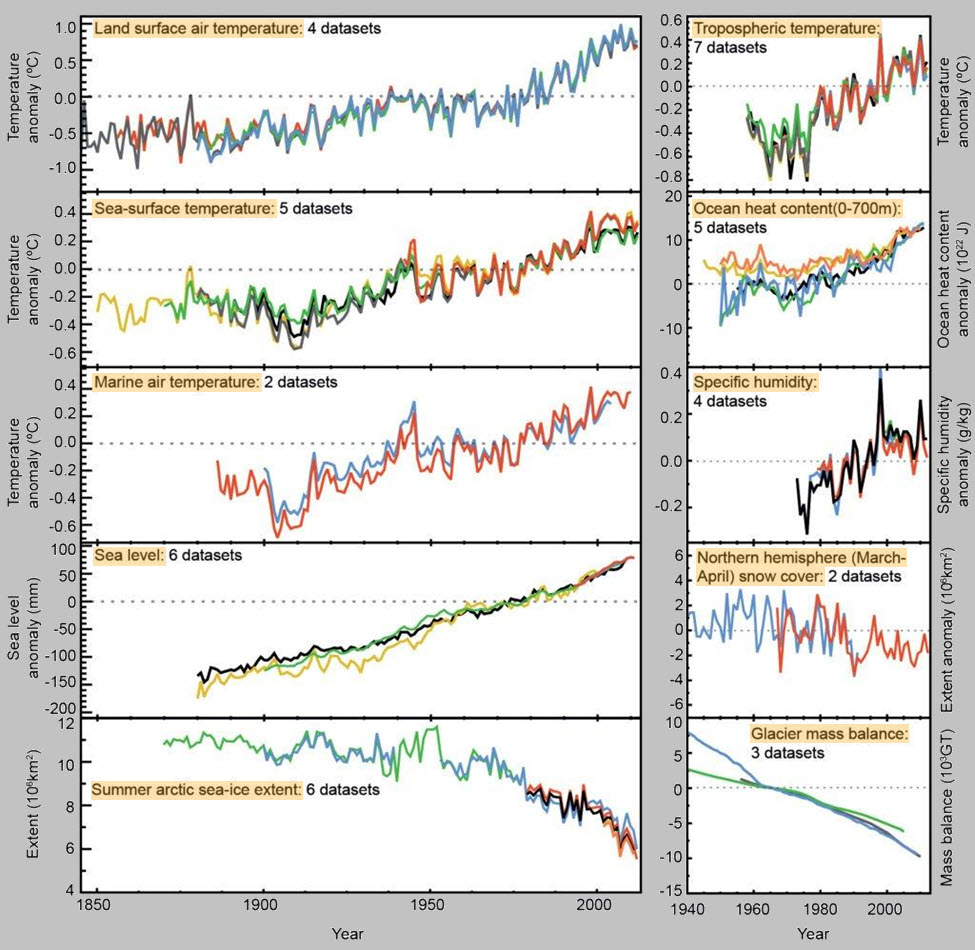
ASCE just released Technical Bulletin 3 that dives into this issue. It looks a lot at the origin of the climate change. But it also contains a lot of trendlines that show historical averages are all but useless. While these shifts may not seem large, they show a trendline to more extremes. This means that today’s conditions are likely to be the lower bounds of tomorrow.
Highlighting two of key values in structural design are land surface air temperature and sea level
- Sea Level currently sits +4″ over the historical average. And nearly +10″ over the earliest modern records
- Land Surface air temperature in the last few years has sat 1 degree C above the last 150 year average
These are pretty critical points in design.
Structures are built very differently in Miami and Orlando. One is at or below sea level, while the other doesn’t need to think much about that issue. Miami has an average elevation of 6 feet, and this new average shows it’s lost nearly 14% of that. Looking 30 years into the future it’s likely to nearly double to 30%. That’s a substantial design condition to consider.
Air temperature has a similar impact on building design. Miami and Jacksonville are similarly coastal Florida cities. One doesn’t bother with freezing, while the other expects it. A few degree change turn Jacksonville into Miami. This may make design easier in the winter, but also means it may be more difficult in the summer.
Adapting to the New Normal
This need not be all doom and gloom. Simply put we know how to do resilient design. We know how to do it affordably. And better yet we know how to value this, read: insurance. We just need to accept conditions are changing, and then build it into our designs.
https://www.asce.org/publications-and-news/civil-engineering-source/article/2026/01/22/why-engineers-should-plan-for-weather-and-climate-changes

VP of Business DevelopmentAaron Fisher
Latest News
Saving on School Construction
A new school is a big financial and community investment. It makes a community more attractive to students, teachers, families, […]
Insurance: Impacted by Material Choices
With the increased risk of disasters and the cost of construction; insurance costs are up. But, they aren’t going up […]
Wastefully Fixing Traffic Barriers
On I-495 and I-270, MDOT has been stapling Steel W-Beam Barriers to crumbling concrete barriers. What happened to these barriers? And […]

Single Stairwell: A Fire Failure
Recently a lot of jurisdictions have been considering and passing rules to only require 1 stairwell in multifamily residential buildings. […]
