Compressive Strength: Not The Only Factor
Aaron Fisher | March 21, 2025
It is true that PICP concrete is 8,000 psi relative to P-ACB at 4,000 psi. However, a surface is only as strong as its weakest link. And in both cases it isn’t the unit paver; it’s what’s below.
Concrete is usually 2500+ psi, and asphalt is maybe 1000 psi (less on a hot day). They can carry the weight of a car because of how the whole surface is constructed to distribute the weight. A better constructed sub-base (geofabrics, larger stone, etc.) is really the key item to pavement performance.
The other challenge with PICP is the surface integrity relies on compression along the surface. If you ever took a paver out of the surface you cannot stick it back in because the whole surface has shifted to fill the space. It’s also why a ribbon curb is required to give the surface something to push off against. P-ACBs don’t need the compression, only something to not let the edge units drift. It’s why we can remove and replace a single unit.
The real reason that PICP is 8000 psi is for appearance, freeze-thaw, and to resist salt damage. We have actually found the better way to address this is through penetrating sealers (as is done for cast in place concrete and masonry). This is recommended in the traditional paver world, but cannot be done with PICP because it will clog all the water pathways in the joints. Hence they go to these higher compressive values to compensate.
So while better compressive strength does result in property improvements, it ignores that the real world is about optimizing many properties and the whole system.

VP of Business DevelopmentAaron Fisher
Phone
Location
MD: Bladensburg
Email
Languages
English
Latest News

Saving on School Construction
A new school is a big financial and community investment. It makes a community more attractive to students, teachers, families, […]
Insurance: Impacted by Material Choices
With the increased risk of disasters and the cost of construction; insurance costs are up. But, they aren’t going up […]
Wastefully Fixing Traffic Barriers
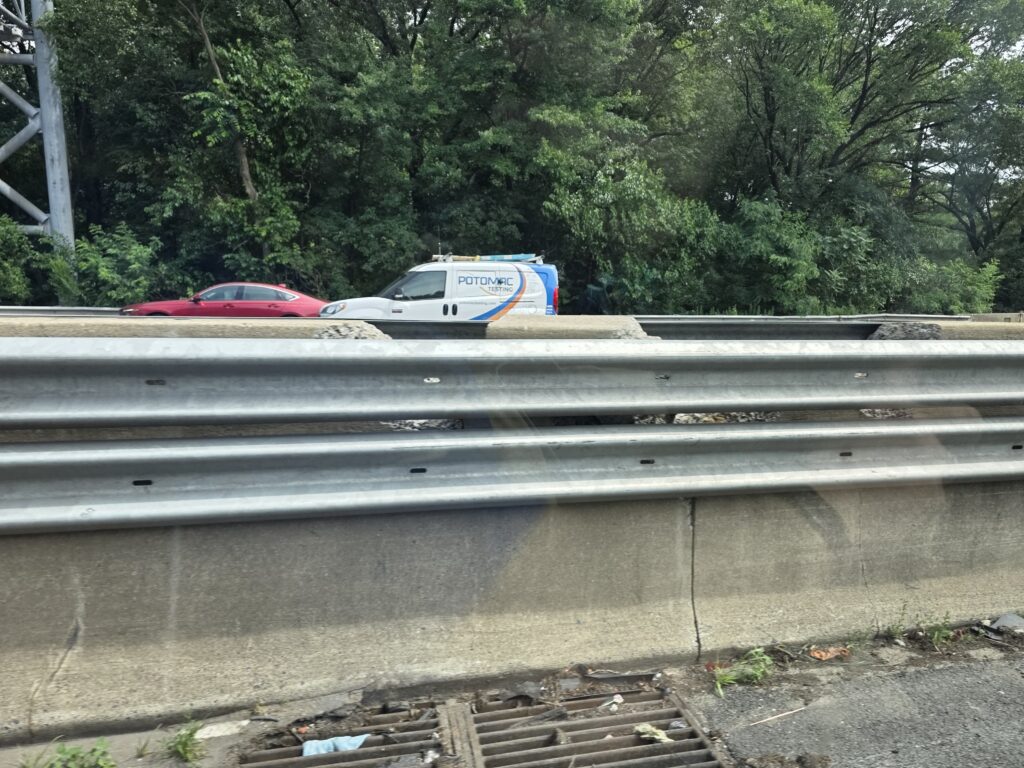
On I-495 and I-270, MDOT has been stapling Steel W-Beam Barriers to crumbling concrete barriers. What happened to these barriers? And […]
Building for Tomorrow, Today
Every building or structure has a designated lifetime: 30 years, 50 years, 100 years. However what happens when the conditions […]
