GFRP for Engineers: Top 12 Questions
After giving 100 presentation, I wanted to answer the 12 most common questions from engineers that I get when talking about GFRP (aka Fiberglass Rebar).
1. Where Has it Been Done? Everywhere
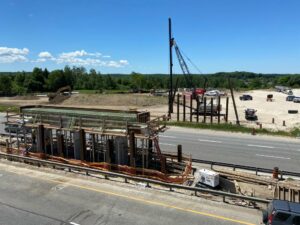
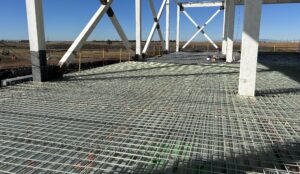
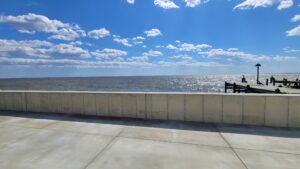
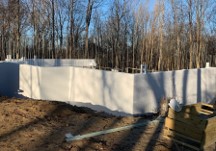
Honestly, the better question is where hasn’t it been done at this point. It’s been used houses, bridges, pavement, sea walls, and everything in between.
2. Tensile Strength? 2.5x-3x Stronger Than Steel
Concrete is strong under tension, and weak under compression. Rebar provides tensile strength. Grade 60 steel has a tensile strength of 60 ksi. GFRP has a tensile strength of 150 ksi – 180 ksi.
Follow On: Because it is brittle you don’t design with that full value. Creep also reduces that value, but manufacturers have been able to retain >60% of its tensile strength at 100 years
3. Stiffness? 1/3 the Modulus of Elasticity of Steel
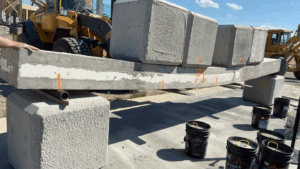
While not as stiff, it’s important to recognize that concrete reinforced with GFRP is much stiffer than just GFRP by itself. So you do not need to use triple the GFRP as steel. This can become an issue in deflection-controlled elements, resulting in a minor penalty for very long spans (about one bar size). In below-grade and pavement elements this often doesn’t even come up. If stiffness matters, make sure you are using ASTM D8505 and not D7957.
4. Cyclic Loading? 20x the Fatigue Resistance of Steel
2 million cycles at steel’s failure load. Stress strain curve looked like it came out of a copier machine between #2 and #2 million. The first cycle sees some difference; concrete cracks because it doesn’t flex/bend as it deflects.
5. Isn’t Failure Dramatic? No, It’s Less Catastrophic
Because of the high tensile strength tensile strength of GFRP the failure mode is switched to compression-controlled failure. At the failure point only the concrete is damaged, while the GFRP remains as installed. Yes, capacity is reduced and a repair is required, but the element retains some strength. See how the deflection disappears after the load is removed in the video.
Tension failure is not inherently safer. At failure no additional force is needed to cause elongation. Meaning the load that induces elongation would also cause its failure.
6. Development Length? Shorter than Steel
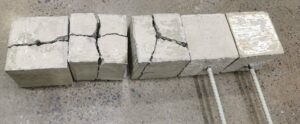
Integral deformations can result in bond stresses 1.5x the value of steel and 3x the GFRP code minimum. When this happens full development happens quicker, resulting in shorter developments.
7. Thermal Expansion? Same in Longitudinal
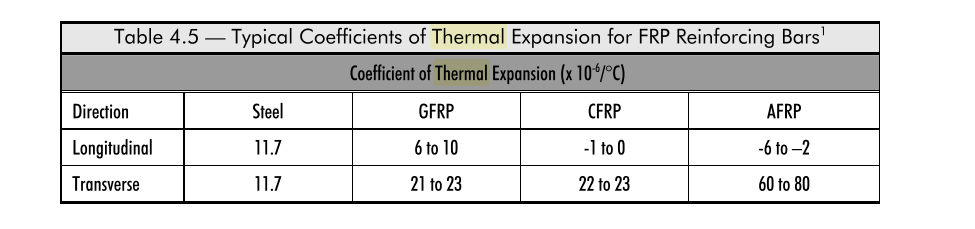
Same in the longitudinal, different in the transverse. In practice, the small dimension in the transverse direction is negligible.
8. Fire Rating? 4h+ Fire Rating
ASTM E119 with integrally deformed bars show a 4h+ fire rating.
While the resin fails at the test’s temperature, it is the glass fibers doing the structural work. They don’t melt until 3000 °F. If you have a fire at those temperatures you have another set of problems.
9. Sustainability? -35% CO2e on Cradle-to-Gate Basis over steel
Additional savings can be had by accounting for handling, transportation, and longevity. More details.
10. Bending? Just Like Steel
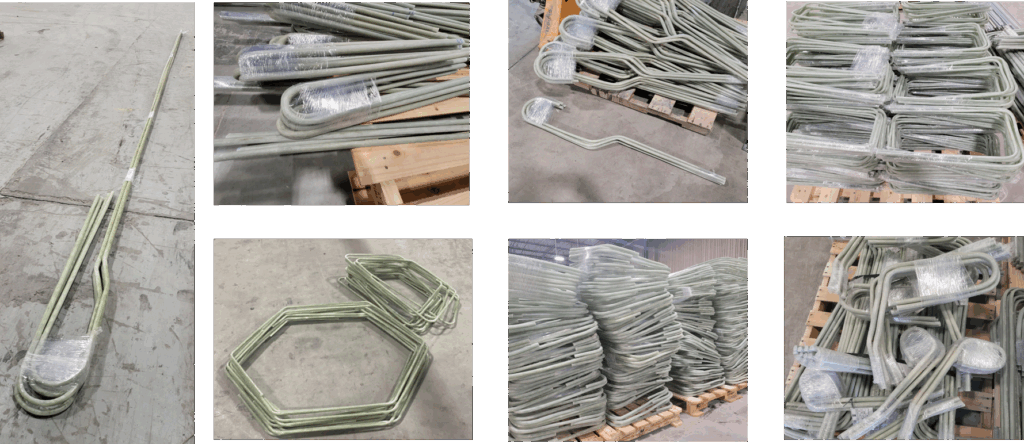
Small radius bends need to be done in the factory. Manufacturers can do any shape in the steel manual plus a few you’ve never seen before.
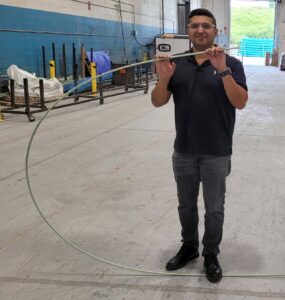
Large radius bends +/- 10 degrees can be done in the field. Also unintentional bends (eg drops) are forgotten by the material.
11. Lifespan? 100+ Years
Bridges built in the early 2000’s, tested @ 15 years have an expected lifetime of 114 years.
12. UV Damage? No Sunscreen Needed
UV damages the resin, but its the glass that is largely responsible for the material fibers. Accelerated testing in the Florida sun over a year showed discoloration, but no change in the key material properties of the bar.
Want a lunch and learn? Got contractor questions about fiberglass rebar?

VP of Business DevelopmentAaron Fisher
Latest News

Saving on School Construction
A new school is a big financial and community investment. It makes a community more attractive to students, teachers, families, […]
Insurance: Impacted by Material Choices
With the increased risk of disasters and the cost of construction; insurance costs are up. But, they aren’t going up […]
Wastefully Fixing Traffic Barriers
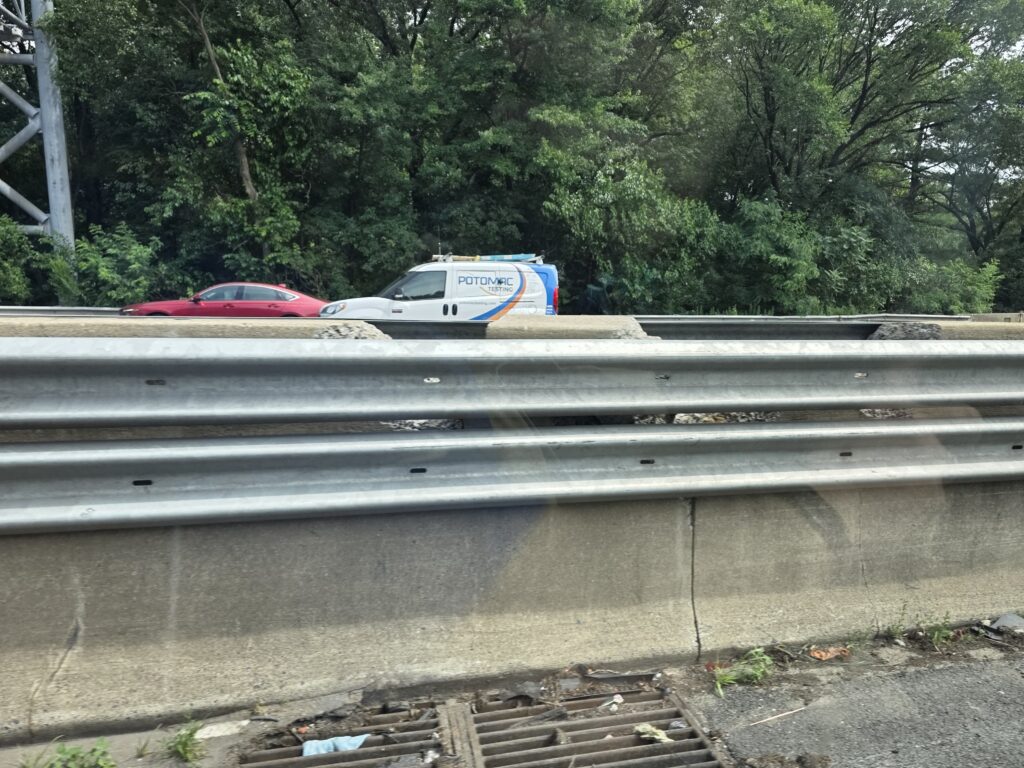
On I-495 and I-270, MDOT has been stapling Steel W-Beam Barriers to crumbling concrete barriers. What happened to these barriers? And […]
Building for Tomorrow, Today
Every building or structure has a designated lifetime: 30 years, 50 years, 100 years. However what happens when the conditions […]
